Trans: Transgender Dating App
4.02.33KReviews
Analysis ByAppCompare
I approached Trans: Transgender Dating App as a social app for adults looking to meet transgender, lesbian, gay, and bisexual people, rather than as a general-purpose social network. That distinction matters. The first impression is easy to understand: it is built around dating and connection, with a clearly defined audience and an emphasis on people who may prefer a more focused space than a broad dating service.
My overall reaction is positive but measured. The app can be useful when I want to browse within a specific community, start conversations, and see whether a connection develops over time. It is less convincing as a single dating solution for everyone, especially if I expect a large local pool, highly detailed discovery tools, or a completely frictionless experience. Its lasting value depends less on novelty and more on whether enough suitable people are active in my area and whether I am willing to keep my profile current.
What the first week feels like
The first week is when the app has the most natural appeal. A focused dating environment can feel more comfortable than repeatedly explaining identity, orientation, or expectations on a mainstream service. I can enter with a clearer idea of the community I want to engage with, which makes browsing feel more purposeful than swiping through an audience that may not understand what I am looking for.
The app is free to install and use as a starting point, although it includes optional purchases priced from $15.99 to $54.99 per item. That makes the early experience relatively easy to test: I can see whether the available profiles and conversations feel relevant before deciding whether additional spending makes sense. I would treat those purchases as optional experiments, not as a requirement to prove that the app is worthwhile.
The audience is mature, with an age rating of 17+, and the store summary presents it as an 18+ dating service. I would therefore approach it as an adult-oriented space and avoid treating it like a casual chat app. That also means I would be careful about what I share, how quickly I move a conversation elsewhere, and whether a profile gives me enough reason to trust the person behind it.
One useful first-week habit is to write a profile that answers practical questions instead of relying on a short label. I would mention what kind of connection I want, whether I prefer slow conversation or direct plans, and what respectful communication looks like to me. In a focused community, this can reduce mismatched conversations more effectively than trying to appeal to everyone.
Finding the right audience
The strongest early benefit is focus. The app is not trying to be every kind of social platform at once; its identity is tied to transgender, lesbian, gay, and bisexual dating. For someone who feels overlooked or misunderstood on broad dating apps, that focus can make the first browsing sessions feel more relevant.
There is also a practical trade-off. A narrower audience is only an advantage when it contains enough active people who match my location, age range, relationship goals, and communication style. If the nearby selection is thin, the focused design cannot solve that by itself. I might find better results by keeping this app alongside a mainstream service rather than deleting every alternative immediately.
In an everyday scenario, I could use it after moving to a new city. During the first few evenings, I might browse slowly, save the names of people whose profiles show compatible intentions, and begin with a thoughtful message rather than sending the same greeting to many users. The app would be useful as a way to identify potential community connections, but I would not assume that a promising profile automatically means a safe or compatible date.
Conversation needs more care than browsing
Browsing is usually the easy part of dating. The real test is whether the app helps me move from recognition to a comfortable conversation. Here, my own behavior matters as much as the interface. A specific opening based on a person’s profile is more likely to create a useful exchange than a message focused only on appearance or identity.
I would also avoid treating the app’s community focus as permission to ask intrusive questions. Transgender and queer users should not have to educate every match about personal history, bodies, or transition. A respectful conversation should begin with ordinary shared interests and relationship expectations, just as it would anywhere else.
That is one of the less obvious ways to get more from the service: use its focused audience to improve relevance, not to skip basic courtesy. If a profile is vague, I would ask about plans, interests, or preferred communication rather than making assumptions. This approach also helps reveal quickly whether someone is genuinely interested in meeting a person or merely collecting attention.
Whether it earns a place after the first month
After the initial curiosity fades, the question changes from “Can I find interesting people here?” to “Does this app keep helping me find the right people?” In my view, the answer depends heavily on local activity and personal consistency. A dating app becomes valuable month after month when it produces a manageable flow of relevant conversations, not just a memorable first session.
The service has been available since Nov 11, 2016, and the current version is 3.0.3. It has passed one million installs, with an average rating of 4.0 from roughly seventeen thousand ratings and about two thousand three hundred written reviews. Those figures suggest a real, established audience rather than a brand-new experiment, but they do not guarantee that my own neighborhood will be lively or that every profile will be a good match.
For recurring value, I would use a simple weekly routine instead of opening the app constantly. I might check new profiles once or twice, answer messages I genuinely want to continue, and remove conversations that clearly go nowhere. This prevents the service from becoming an endless scrolling habit and makes it easier to judge whether it is contributing anything useful.
Keeping a profile fresh without turning dating into work
Profile maintenance is more important than many people expect. A profile that remains unchanged for weeks can look abandoned even when I am still interested in meeting someone. Updating a photo or rewriting a sentence when my goals change can make the app feel more current and reduce conversations based on outdated expectations.
There is a limit, though. I do not want a dating app to become another chore that demands daily optimization. If I find myself editing every detail, checking repeatedly for attention, or spending money simply to stay visible, the recurring value starts to weaken. My preferred approach is light maintenance: clear information, honest intentions, and occasional cleanup.
A helpful workflow is to separate discovery from decision-making. I can browse at a convenient time, then return later to consider whether a profile actually fits my needs. This reduces impulsive messages and makes it easier to notice small warning signs, such as contradictory details, pressure to move too quickly, or a refusal to answer ordinary questions.
When optional spending is and is not sensible
Because the app is free with in-app purchases, I would postpone spending until I understand my local experience. If I am receiving relevant conversations and can use the basic service comfortably, paying is not automatically necessary. If an optional purchase clearly saves time or improves a specific part of discovery, I could consider it, but only after deciding what problem it solves.
I would not buy anything to compensate for a weak local audience. No paid option can create genuine compatibility where there are not enough active users. I would also avoid treating payment as a shortcut to trust. A paid interaction is still only an interaction, and I would apply the same safety standards to every match.
This is where the app compares differently with mainstream dating alternatives. Larger services may offer a broader pool and more polished discovery systems, while this app’s appeal is its more specific community orientation. I would choose this one when relevance and identity-aware context matter more than maximum reach. I would choose a broader service when location, age range, or relationship preferences leave too few realistic matches here.
Maintenance burden and the reasons fatigue appears
The main maintenance burden is not installation or setup; it is attention. Any dating service can consume time through repeated browsing, unfinished conversations, and the pressure to respond immediately. A focused audience may make the search more meaningful, but it does not remove the emotional work of deciding whom to trust, how much to disclose, and when to stop pursuing a conversation.
Fatigue can also come from repetition. If I see similar profiles, receive vague introductions, or have several chats that never become plans, the app can start to feel like a queue rather than a community. That is not necessarily a flaw unique to this service, but it affects whether I will keep returning after the first month.
I would manage that by setting a clear stopping point for each session. Instead of scrolling until I feel tired, I would review only a small number of profiles and contact people I can address specifically. I would also archive or ignore conversations that remain one-sided. This protects my time and gives me a more honest picture of the app’s active value.
Safety and boundaries in practical use
The mature audience rating should not be mistaken for a safety guarantee. I would keep early conversations inside the app until the person’s behavior feels consistent, avoid sharing identifying details too soon, and arrange a first meeting in a public place. I would tell a trusted person where I am going and keep control of my own transport.
Those steps are especially important when a service brings together people who may already face harassment, fetishization, or unwanted questions elsewhere. I would leave a conversation when someone ignores boundaries, pressures me for intimate information, or treats identity as a novelty. The app can help me find people with potentially shared experiences, but it cannot replace judgment.
Another practical tip is to read for tone rather than only scanning profile labels. A person may use the right words while still communicating disrespectfully. Small details—how they respond to a boundary, whether they ask reciprocal questions, and whether their plans are consistent—tell me more about a possible connection than a polished introduction.
Who should skip it
I would skip this app if I need a very large local dating pool immediately, if I want a platform built mainly around friendship rather than dating, or if I dislike maintaining conversations and profiles. I would also look elsewhere if I expect extensive compatibility tools or a highly structured matching process to do most of the work for me.
It may not be the best choice for someone who wants a single universal app for every type of connection. Its value comes from its audience focus, and that focus can feel limiting when my preferences are broad or when nearby activity is low. In that situation, using it as one part of a wider search is more sensible than expecting it to carry the entire experience.
My long-term verdict
After the novelty fades, I think the app earns a place for users who specifically value a transgender, lesbian, gay, and bisexual dating environment and who find enough relevant activity in their area. Its greatest strength is not that it eliminates the difficulty of dating; it is that it can make the first step feel more targeted and less dependent on explaining who I am to a general audience.
Its weaknesses become clearer with regular use. The audience may not be equally useful everywhere, conversations still require patience and filtering, and optional purchases should be approached carefully rather than assumed to improve every experience. The service also asks me to maintain realistic expectations: a focused community is helpful, but it cannot guarantee chemistry, safety, or a steady stream of compatible matches.
For me, the best way to use it is as a deliberate part of a dating routine. I would create a clear profile, check in occasionally, start fewer but better conversations, and judge success by the quality of exchanges rather than the amount of browsing. I would keep another option available if local activity became too limited, and I would stop spending if purchases no longer solved a specific problem.
My recommendation is cautious but genuine: try it if its community focus matches what you are looking for, especially if mainstream dating apps have made you feel unseen or poorly matched. Give it enough time to judge local activity, but do not confuse a focused identity with a guarantee of lasting usefulness. If the people and conversations fit your life, it can remain a worthwhile social tool; if not, the app’s narrow focus may become its biggest limitation.
FAQ
What is Trans: Transgender Dating App designed for?
Trans: Transgender Dating App is designed to help transgender people, non-binary users, and their admirers connect for dating, friendship, conversation, or potential relationships. After exploring the app, its main focus appears to be creating a more inclusive space than general dating platforms. However, the quality of matches can depend heavily on your location, age range, profile activity, and how clearly you describe what you are looking for.
Is Trans: Transgender Dating App safe and private to use?
The app may include standard dating-app features such as profiles, messaging, blocking, and reporting, but users should still take responsibility for their personal safety. Avoid sharing your home address, workplace, financial information, or intimate content with strangers. Review the app’s privacy policy and permissions before signing up, and remember that no dating platform can completely prevent fake profiles, harassment, screenshots, or misuse of information.
Does Trans: Transgender Dating App require payment?
You can generally download and begin using a dating app like this without paying, although some features may be limited to free members. Premium options can include additional visibility, unlimited messaging, advanced filters, or other profile-related benefits. Before subscribing, carefully check the current pricing, trial terms, renewal conditions, and cancellation process in the Google Play Store or Apple App Store, since these details may change.
Can I use the app to find friendships instead of dating?
Yes, the app can be useful for more than romantic dating, depending on the people you meet and how you present your intentions. You may find users interested in friendship, community, casual conversation, or support, but expectations vary from profile to profile. To avoid misunderstandings, state clearly whether you want a relationship, friendship, networking, or simply respectful conversations before starting to connect with others.
What should I know before creating a profile on the app?
A complete and honest profile will usually give you better results. Choose recent photos that represent you accurately, use respectful language, and explain your interests and expectations without revealing sensitive personal information. Be patient if your area has a small user base, and do not feel pressured to respond to anyone. If a conversation becomes uncomfortable, use the available block or report tools and stop communicating.
Pros
- Inclusive space designed specifically for transgender and gender-diverse users.
- Profile filters help users find more compatible dates and connections.
- Supports identity expression through customizable profile details.
- Useful for meeting people beyond local LGBTQ+ social circles.
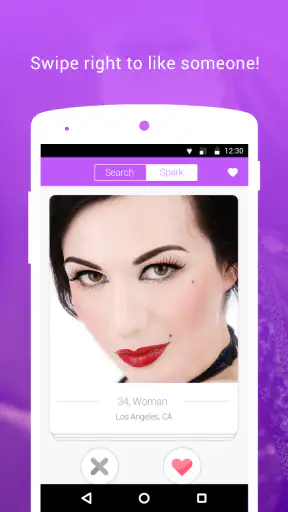
- Simple interface makes browsing and messaging easy for new users.
Cons
- The active user base may vary significantly by location.
- Some features may require a paid subscription or in-app purchases.
- As with any dating app
- fake profiles and unwanted messages can occur.
- Matching quality depends heavily on how completely users fill out profiles.
- Privacy-conscious users should review visibility and data-sharing settings carefully.